
A majority of Americans believe our country’s culture and way of life have “mostly changed for the worse” since the 1950s, according to the Public Religion Research Institute’s 2025 American Values Survey. That includes 55% of white people, 53% of Black people and 57% of Latinos.
For many, the problem lies in the collapse of the marriage system of that decade, when the majority of women married before they turned 21, only 6% of men and women reached age 35 without having married, and divorce rates fell to a postwar low of 9.2 divorces per 1,000 married women. The solution, according to the Heritage Foundation’s “Project 2025” blueprint for family policy, is to incentivize early marriage and childbearing (for heterosexual partners only) and abolish no-fault divorce.
I’ve spent much of my career as a historian criticizing any idealization of 1950s marriages. Domestic violence and child abuse were much more common then than today. It was perfectly legal for a man to forcibly rape his wife. And depression among homemakers was so widespread that by the end of the decade, physicians had labeled it the “housewife’s syndrome.”
Little wonder, then, that after California passed a “unilateral” divorce bill in 1969, allowing individuals to leave an unhappy marriage even if their partner objected, states that followed suit saw women’s suicide rates decline by 20% over the next five years. Reports of domestic violence fell by somewhere between a quarter and a half.
But I now believe I’ve been too dismissive of such nostalgia. The sense of loss that underlies it is not “all in people’s heads.” Instead, I’ve come to see it as an example of what physicians call “referred pain,” like when a problem in one part of the body is experienced as pain elsewhere.
So too, I think, much of the pain we feel in our social and family relations originates in a deeper part of the economy and the body politic.
The fact is, we’re doing “family” better than we used to. Domestic violence rates have continued to fall since the 1970s. Husbands do much more housework and hands-on child care than they used to, and both parents spend more time interacting with their children.
Few modern women have to settle for the low expectations expressed by a Bay Area mother of five, married around the end of the 1950s, who told an interviewer that “any woman who’s got a man who hardly ever get violent and who doesn’t drink much hasn’t got a lot to complain about.”
Married couples today have much higher expectations of mutual support, sympathy, loving companionship, honesty and egalitarian sharing than in the past. And people who do marry have been getting better at meeting these new expectations. After peaking at 22.8 divorces per 1,000 married women at the end of the 1970s, the divorce rate had fallen to 4.2 per 1,000 in 2024, lower than the 1950s.
But one reason divorce rates have fallen so much is that people who have not yet achieved the economic security and personal stability they believe marriage requires are far less likely to “give marriage a shot” than in the past. And they have good reason for caution. A successful marriage requires more effort, engagement and maintenance skills than ever before, just as many people have lost the economic security, predictability and social support systems that give people the confidence to make such a weighty commitment. While couples may not know the sociological research on how financial challenges, job stress and time pressures increase negativity in marriages, they have seen the effects in practice. And they have far less reason to be optimistic about their future stability than people did in the postwar era.
Between 1949 and 1969, every economic expansion saw at least two-thirds of income growth go to the bottom 90% of the population. If those postwar wage trends had continued, two Rand economists recently estimated, by 2018 the bottom 90% of the population would have been earning 67% more than they actually were. Instead, between 1975 and 2018, it was the top 10% who made big gains, taking in $47 trillion more than they would have if postwar wage trends had continued.
As of 2025, the top 1% of the population held 31.9% of the wealth. We now live in what three Citibank financial analysts have labeled a “plutonomy,” in which the wealthiest 20% of the population account for about half of all consumer spending. Not surprisingly, more and more companies have begun to compete for the ample spending power of those consumers. And you don’t do that by lowering prices, the way you do with mass-produced televisions and ready-made clothes, but by multiplying premium experiences and luxury goods.
One good example of how this results in referred pain can be seen in housing. What underlies a big chunk of today’s nostalgia for 1950s families isn’t so much what went on in the family home but how people got such a home. In 1955, economist John Schmitt reports, a median-priced home cost 2.5 times the median annual earnings of men who worked full time. For women who worked full time, that same house cost almost five times as much as their median annual earnings. Those figures help explain why most men could afford to marry young in that era and why so many women couldn’t afford not to marry.
In 2024, by contrast, the median-priced house cost 5.9 times the median earnings of a full-time male worker and more than seven times the median earnings of a full-time female employee.
The costs of a family’s most important sources of security — homes, college education and medical care — have risen faster than average wages. The same is true for the kind of “treats” that people associate with a satisfying family life — for example, a family outing at the ballpark or an amusement park. Back in 1962, on the opening day of the Los Angeles Dodgers’ new stadium at Chavez Ravine, the cheapest ticket cost $2.50. Had the price risen at the actual rate of inflation, that would be just over $27 in today’s dollars. But on opening day 2026, the cheapest seat was $155, nearly six times as expensive in constant dollars.
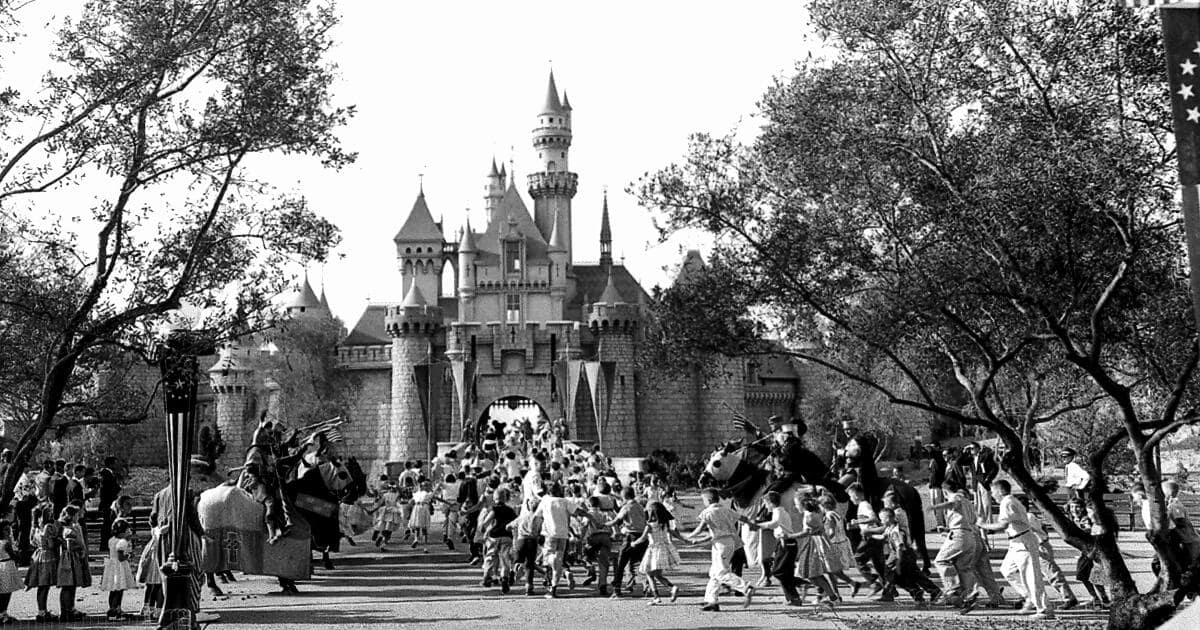
Or consider what’s happened at that most iconic of family vacation destinations. Had Disneyland’s admission price risen at the average rate of inflation, the 1962 adult admission of $3.75 would now be $41. As of 2026, however, admission is $104 for adults, or up to $225 on high-demand days.
Meanwhile, the stunning growth in inequality has reorganized daily life to benefit the wealthy in ways that impose increasingly stressful inconveniences on the rest of us. High-worth customers call dedicated phone lines that are quickly answered by a human being while the rest of us wait through seemingly endless loops of recorded music or struggle to make an AI assistant understand a question. Sports arenas and amusement parks increasingly charge fees for special experiences or services that were once either available to everyone or not available at all.
These “premiums” are not just the little perks that have always come with wealth — luxuries that we might envy, but which take nothing away from our own experiences. They come at a cost to the rest of us. It doesn’t hurt my family’s enjoyment of Disneyland if we can afford only one visit a year and other families can go as often as they wish. But when other families can afford to pay between $300 and $499 for Lightning Lane Premier Passes that allow them to bypass lines any time they like, that lengthens everybody else’s wait time.
Contrary to contemporary nostalgia brokers, the main threat to family life and social solidarity today isn’t the fact that couples who can’t get along can obtain a no-fault divorce. It’s not that women and girls have access to birth control and the fallback of abortion when needed. Nor is it that same-sex couples can now formalize their commitments the same way that different-sex couples do and can access alternative ways to have children.
We need to address the underlying sources of pain and resentment: the reversal of the economic equalization of the 1950s and 1960s, the shredding of the social and medical safety net, the assault on hard-won protections for workers and consumers, and the extent to which middle- and lower-income families have been saddled with so many of the stressful inconveniences that are the flip side of the privileges accorded the rich.
Stephanie Coontz, a professor emerita of history at Evergreen State College in Washington, is the author, most recently, of “For Better and Worse: The Complicated Past and Challenging Future of Marriage.”