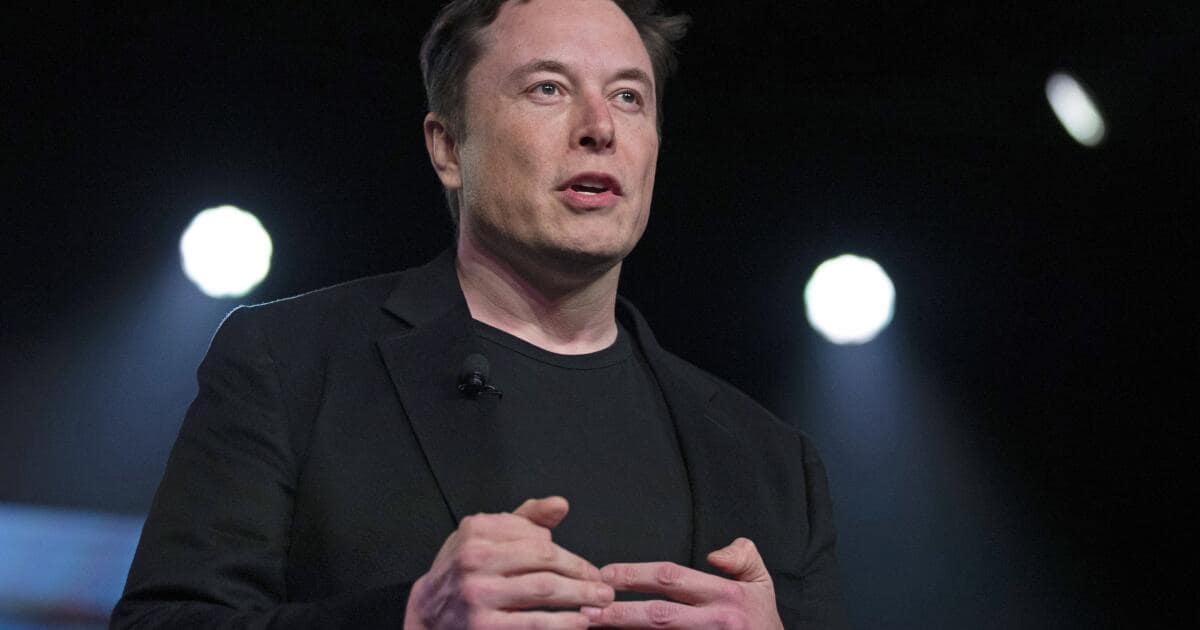
I am not a huge fan of Elon Musk as a political activist or commentator. I think he’s made Twitter — sorry, X — worse. His support for the nationalist right in Europe has been ugly. His tenure leading the Department of Government Efficiency mostly amounted to a missed opportunity and often descended into little more than performative vandalism. His personal life is not exactly consonant with my preference for bourgeois family values. Though, one can hardly accuse him of being a deadbeat dad.
On the other hand, I am a huge fan of his accomplishments in business and engineering. He helped create the foundations of the digital economy with PayPal. At the helm of Tesla, he made the electric car into a viable industry (something climate activists once lionized him for). Starlink, his internet satellite business has been transformative. And, finally, there’s SpaceX, which went public last week. It’s a testament to human ingenuity, immigrant success and American greatness, on a scale that is hard to describe.
If Musk is successful in his ambitions, he will be more responsible than any other human for making ours an interplanetary species. That would mean that long after nearly every name of every politician and businessman you can think of have been forgotten, people will still remember Elon Musk.
But none of that is very relevant to the explosion of outrage over his status as the world’s first trillionaire. I offer my opinions about Musk only because a remarkable number of people think if you defend the morality or legality of him being so rich you must be on Team Elon. I am not. I am on Team Capitalism.
But the confusion hardly ends there. If you followed the reaction on social media to Musk’s shattering of the trillionaire barrier, you’d think that he now has a trillion dollars in the bank. Indeed, indignant politicians rushed to propose taxes on Musk’s wealth as if it was a suddenly discovered treasure ship (with laughably questionable math). Many people talked about Musk “hoarding” dollars that rightfully belong to the poor, the people or perhaps Social Security beneficiaries.
That trillion dollars doesn’t exist, save as a function of accounting. He owns a large number of shares in SpaceX. Those shares have an estimated book value — for now — of about $1.03 trillion. If the stock price dips in the future, as I expect it will, he might not be a trillionaire for very long.
Let’s say, heaven forbid, that SpaceX has a disaster on the launchpad, loses some major NASA contract, and the stock price tumbles. What happens to those dollars he supposedly hoarded? Do they vanish? No, because they never existed in the first place.
A shocking number of people think — or demagogically pretend to — that the economy is a static pie. All of the wealth in the economy exists in the form of a finite number of dollars. This zero-sum fallacy is why people think he’s hoarding wealth. He’s not. He’s creating wealth, and I don’t just mean for all of the SpaceX welders and cafeteria staff who now own more than a million dollars’ worth of stock.
Increased innovation and productivity grow the pie, which means more pie for more people. That’s what economic growth means. In 1969, the year I was born, the U.S. gross domestic product was about $1 trillion, in nominal dollars. (If you adjust for inflation, U.S. GDP was around $1 trillion a century ago.) Does Musk now own all of America’s wealth? Of course not, because the economy has grown massively since then.
Other than dislike for Musk, the main driver of all this outrage is our obsession with income inequality. To some, it’s just not right that anyone be so rich when others are so poor — or feel so poor compared with Musk. This is an aesthetic complaint masquerading as a policy position. In objective terms, no one was made poorer by Musk getting richer. Subjectively, however, we’re all poorer in the sense that the richest person in the world became marginally richer.
That’s a vibes argument.
If your neighbor wins the lottery, you will be poorer in comparison. But your ability to clothe, feed and house you and your family will not have changed.
If I cure cancer tomorrow, I will get very rich. Where’s the injustice? The world gets a cure for cancer, the economy saves countless billions fighting cancer, and I get to buy a bunch of cool stuff. Everyone, except maybe some drug companies and oncologists, comes out a winner.
I’ll never cure cancer. But capitalism probably will, eventually. Which is just one of a trillion reasons why I am on Team Capitalism.
Insights
L.A. Times Insights delivers AI-generated analysis on Voices content to offer all points of view. Insights does not appear on any news articles.
Perspectives
The following AI-generated content is powered by Perplexity. The Los Angeles Times editorial staff does not create or edit the content.
Ideas expressed in the piece
-
The article distinguishes sharply between Elon Musk’s politics and personal behavior, which the column finds objectionable, and Musk’s record as an entrepreneur, which the piece describes as extraordinary, crediting Musk with helping build PayPal, turning Tesla into a viable electric-vehicle industry leader, transforming global internet access with Starlink, and making SpaceX a symbol of technological ingenuity and American dynamism.
-
It argues that public anger over Musk becoming the first “trillionaire” is largely based on a misunderstanding of what net worth is, noting that Musk does not hold a trillion dollars in cash but rather owns shares in companies—primarily SpaceX—whose market value currently implies a net worth north of $1 trillion, and that this figure could fall sharply if the stock declines.
-
Building on that distinction, the column contends that critics who talk as if Musk is “hoarding” dollars are trapped in a zero-sum view of the economy, imagining a fixed pile of money; it insists that stock-market wealth reflects expectations about future profits, not a chest of dollars that has been removed from circulation.
-
The piece argues that Musk’s fortune is best understood as evidence of wealth creation, not confiscation, pointing to the jobs and stock-based gains generated for SpaceX employees and other stakeholders, and aligning with commentators who say Musk’s innovations—such as dramatically lowering launch costs at SpaceX—have expanded productivity and opportunity rather than merely redistributing existing resources.[4]
-
The article frames economic growth as a constantly expanding “pie,” noting that U.S. GDP has grown enormously since 1969 and that Musk’s net worth does not mean he “owns” all U.S. wealth; instead, it claims his fortune is one manifestation of the larger pie that capitalism has produced.
-
The column maintains that no one became materially poorer because Musk became richer; it suggests that objections to his wealth are primarily aesthetic or emotional—“vibes” driven by envy or status comparisons—rather than grounded in evidence that Musk’s gains have worsened others’ ability to afford food, housing, or clothing.
-
To illustrate this point, the piece uses analogies: if a neighbor wins the lottery, others are poorer only in comparison, not in absolute living standards; similarly, if someone were to cure cancer and become extremely rich as a result, the column argues that almost everyone would still be better off because of the enormous health and economic benefits.
-
The article portrays concerns over income inequality as often ignoring the dynamic benefits of innovation, and it suggests that capitalism’s track record—such as its potential to deliver breakthrough cures and technologies—provides “a trillion reasons” to side with “Team Capitalism,” even when one is uneasy about the personalities or politics of individual ultra-wealthy figures.
-
Overall, the piece treats Musk’s trillionaire status as a “good thing” in the sense that it signals large-scale innovation and value creation within a capitalist system, rather than as a moral or policy failure, and it rejects calls to see his net worth as inherently unjust or illegitimate.
Different views on the topic
-
In sharp contrast, some analysts argue that Musk’s trillionaire status represents a dangerous level of concentrated power, not merely an accounting curiosity, contending that a trillion-dollar fortune gives an individual a qualitatively different ability to shape markets, public policy, and even the basic functioning of democracy compared with ordinary billionaires.[1]
-
A prominent critique holds that trillionaires and democratic republics are a “toxic mix”: commentary in Bloomberg, for instance, warns that at such extreme levels of wealth, one person can exert outsized influence over elections, regulation, media ecosystems, and critical infrastructure such as satellites and space launch, raising concerns about “absolute power” in private hands and the erosion of democratic checks and balances.[1]
-
Economic-justice advocates similarly challenge the idea that Musk’s wealth is simply the benign result of value creation, arguing that the fortune reflects a “rigged” tax code, generous public subsidies, and a financial system that socializes risk and privatizes gains; Oxfam America, for example, describes Musk’s rise to trillionaire status as the predictable outcome of policy choices that systematically channel wealth and power upward.[3]
-
These critics emphasize that Musk’s net worth now exceeds the combined wealth of a large share of the global population—Oxfam notes that the world’s first trillionaire holds more wealth than the bottom 46% of humanity—and argue that such disparities are historically unprecedented and socially destabilizing, not a mere matter of envy or aesthetics.[3][2]
-
Opposing perspectives also dispute the notion that no one is made poorer when fortunes like Musk’s are amassed, arguing that the same structures that enable extreme wealth—weak labor protections, tax preferences for capital gains and unrealized stock appreciation, aggressive anti-union tactics, and the privatization of publicly supported technologies—contribute to wage stagnation, underfunded public services, and diminished bargaining power for workers.[3]
-
Rather than seeing Musk’s success as straightforwardly emblematic of capitalist dynamism, critics describe it as a policy failure: Oxfam, for instance, contends that Musk’s status rests on “unfair tax rules” and poor corporate-governance standards, including the ability of ultra-wealthy individuals to borrow against stock, minimize tax liabilities, and maintain control across multiple companies and platforms with relatively little public accountability.[3]
-
Moreover, some analyses argue that even if much of Musk’s wealth is “on paper,” the control it grants is very real: as a dominant shareholder and platform owner, Musk can steer investments, influence government procurement decisions, and shape public discourse through vehicles such as SpaceX, Starlink, and X, raising alarms about private actors directing critical infrastructure and speech environments.[1][3]
-
Critics also push back against the article’s characterization of inequality concerns as “vibes,” insisting that extreme disparities have concrete consequences—including higher political inequality, more volatile economies, and worse outcomes in health, education, and social cohesion—and that the rapid concentration of wealth at the top in recent decades reflects structural imbalances rather than simply the fair rewards of innovation.[3][2]
-
Reflecting these concerns, policy advocates across the spectrum of economic-justice organizations call for measures such as stronger wealth and inheritance taxes, tighter campaign-finance rules, robust antitrust enforcement, and labor-law reforms, arguing that without such guardrails, the rise of trillionaires like Musk will deepen inequality, distort democratic governance, and entrench a system in which public resources and risks are leveraged to augment private fortunes at the very top.[1][3]