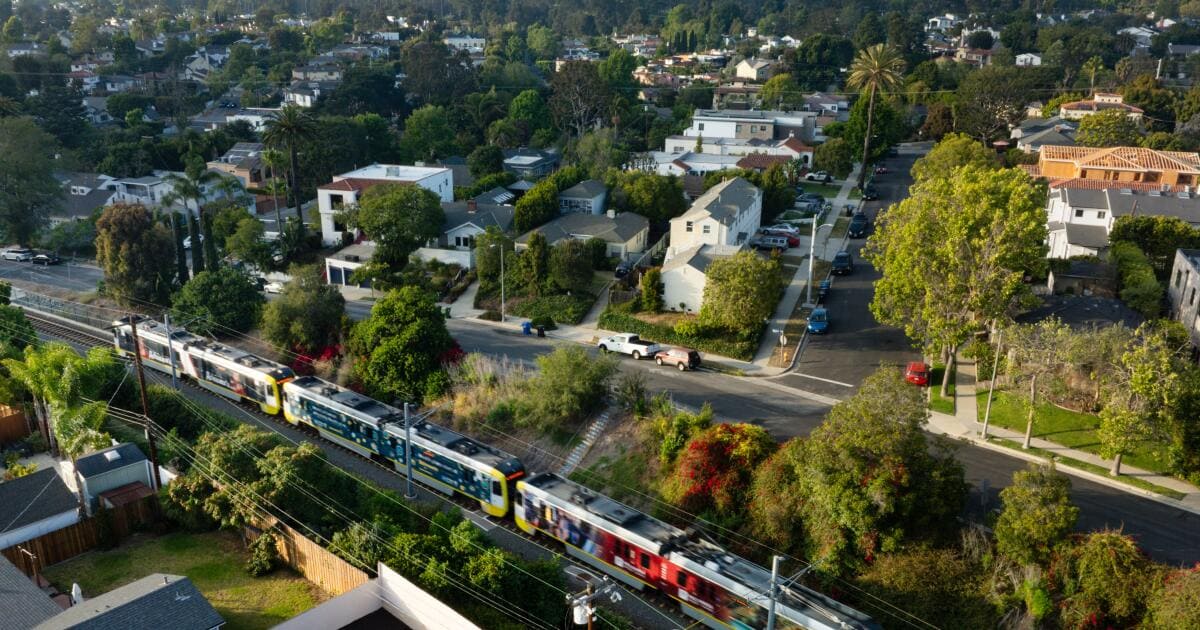
To the editor: Sacramento legislators and our governor have pushed forced density, which now starts July 1, as Senate Bill 79 maps show neighborhoods near transit soon allowing taller apartment buildings (“This new law could create a million new apartments and condominiums in California,” June 9).
Some aging infrastructure remains almost a century old. Neighborhoods near Century City will need more schools, as the ones that are there are already overflowing. How will trash pickup occur or emergency vehicles access buildings that are off small alleys off Santa Monica Boulevard?
Living near Century City, being blessed with a subway close by and jobs aplenty, now seems like a curse. Our city gifted “transit-oriented developments” with bonuses for density and few parking requirements. This enriches developers while only mandating that a small percentage of units be available for low-income residents.
Only developers benefit while their overpriced units remain empty.
Jan Reichmann, Los Angeles
..
To the editor: The new housing code makes great sense. If we’re going to challenge the stranglehold of the car, we’ve got to build more housing by transit stops, and we have to keep on laying more rail. It’s a long-term solution to correct the dominant car culture. We can do it. We have to do it.
Tom Eggebeen, Pasadena
..
To the editor: The article on SB 79 was educational, but it lacked a balanced analysis of the impact on Los Angeles residential neighborhoods. I would appreciate reading about the effect of these multi-unit residences on current residents, both single-family and multi-unit.
For example, how will parking be affected for current residents? What is the city doing to balance the needs of additional housing with the needs of current residents? How can the city facilitate the integration of the new buildings into the neighborhood?
We need some good investigative reporting to flesh out both sides of this issue.
Susan Marvin, Studio City